Back to School Doodle Design Hand Drawn: Smart Choices for Better Projects
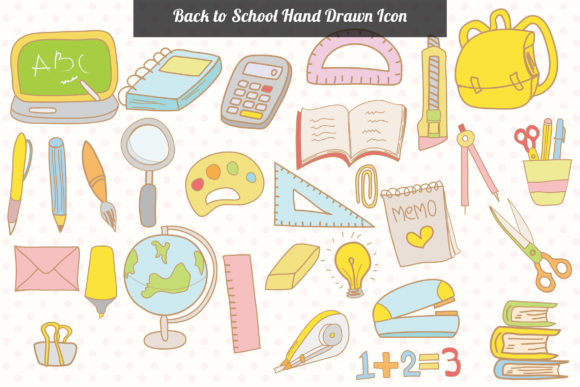
There is a warm, authentic quality to hand drawn doodle designs that standard clip art collections rarely match. The slight wobble of a line drawn by a real hand, the charming imperfections, and the personality packed into a simple apple or bookshelf make these assets incredibly appealing for back to school projects. Whether you are a teacher building engaging worksheets, a small business owner creating educational products, a blogger updating a seasonal header, or a parent customizing a planner, a good "Back to School Doodle Design Hand Drawn" set can be a shortcut to a look that feels both personal and polished. That said, the path from downloading a set of vector and image files to finishing a project that looks professional rather than chaotic is not always a straight line. Overlooking a few key details during selection and use can lead to frustration, wasted time, and results that fall flat. Here is how to avoid the common missteps and make your designs work the way you intend.
Matching the Doodle Style to Your Actual Audience
One of the most frequent mistakes is picking a set purely because the individual elements look cute or fun without considering the context or the viewer. A doodle set that works perfectly for a kindergarten classroom poster might feel out of place on a study guide for college students or a promotional graphic for a tutoring service for older teens.
The problem this causes: A mismatch between visual tone and audience creates a subconscious sense of disconnect. The viewer might not know why the graphic feels "off," but they will perceive it as less credible or less relevant. For a professional creator or marketer, this directly impacts communication and trust.
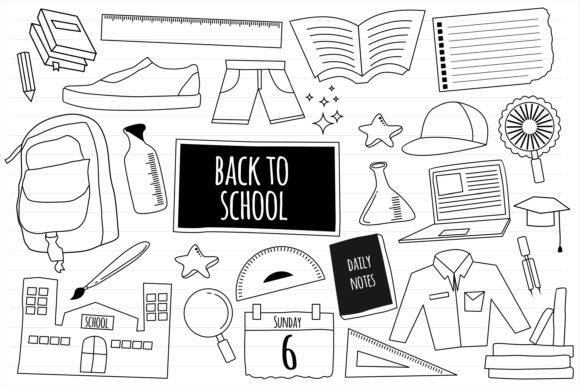
A better approach: Before you download or purchase, look closely at the specific doodles included in the set. Do they feature playful cartoon faces and chunky crayon-style lines? Or are they more refined, detailed line art of microscopes, books, and architectural tools? For high school or university-level materials, lean toward doodles with clean, simple lines and a neutral theme. For younger audiences, the playful, chunky styles are often a perfect fit. Let the specific content you are creating guide your choice, not just the general theme of "back to school."
Understanding the Real Difference Between SVG, EPS, and JPG
Most high-quality doodle sets, like a solid "Back to School Doodle Design Hand Drawn" package, will include files in multiple formats. This is a huge advantage, but only if you understand what each format actually does. A common oversight is treating them as interchangeable.
- JPG files are raster images. They are fine for quick previews or simple mockups, but they have a solid white background. Using a JPG on a colored digital background or overlaid on another design element will leave an ugly white box around your doodle. This destroys the hand-drawn, integrated look you are going for.
- SVG files are scalable vector graphics. They are excellent for web design, digital planners, and cutting machines like Cricut or Silhouette. SVGs typically support transparency well and can be resized infinitely without losing quality. However, complex SVGs with too many nodes can slow down some software or cause rendering issues on older devices.
- EPS files are the professional's choice for deep editing. If you want to change colors, separate elements, or manipulate individual paths, you need an EPS file opened in a vector editing program like Adobe Illustrator or CorelDRAW. Beginners sometimes assume EPS files can be opened in any software, which leads to frustration.
How to avoid this mistake: Think about your workflow before you buy. If you need transparent backgrounds for layering, the JPG is useless. If you want to edit colors, you need the EPS or a properly layered SVG. If you are creating digital stickers for a note-taking app, the SVG is your best friend. Knowing which format does what will save you the headache of downloading a beautiful set only to realize you lack the right tool for the file you actually need.
The "Ready to Use" Trap: Why Editing is Still Required
It can be tempting to take the full JPG collage of doodles and slap it directly onto a flyer, worksheet, or social media graphic as a background. While this technically works, it almost always results in a cluttered, noisy design where nothing stands out. This is the number one beginner mistake when using hand drawn elements.
The result: Poor readability. Text placed over a busy doodle background becomes hard to read. Important information gets lost. The overall look feels amateurish and rushed, which undermines the credibility of the content or brand.
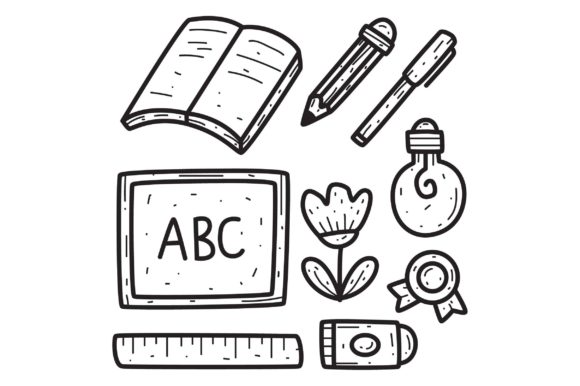
A better approach: Treat the doodle set as a toolkit, not a finished canvas. Open the EPS or SVG file and pull out individual elements. Use a single doodle frame to highlight a key quote. Place two or three small icons (a pencil, a book, an apple) next to a section header. Use the doodles as intentional accents rather than a blanket covering. An experienced designer knows that less is often more. A single, well-placed hand drawn element draws the eye and communicates care. A page smothered in doodles communicates noise.
Licensing: The Overlooked Detail That Can Cost You
For freelancers, small business owners, and entrepreneurs, this is arguably the most critical part of the evaluation. It is very easy to assume that because you bought a digital file, you can do whatever you want with it. This is rarely true. The license that comes with your "Back to School Doodle Design Hand Drawn" set defines exactly what you are allowed to do.
Common misunderstandings:
- Personal vs. Commercial Use: Many affordable or free sets are strictly for personal projects (your child's homework folder, a personal blog). Using them in a product you sell, even if it is a small digital planner, is a violation of the license.
- Standard vs. Extended Licenses: A standard commercial license usually allows you to use the doodles in products you sell (like worksheets or t-shirts) up to a certain number of sales. An extended license is required if you want to sell the digital file itself (like a sticker sheet) or if you plan on mass-producing items.
- Attribution: Some licenses require you to credit the artist, even for commercial use. Others do not.
What to check before you buy: Look at the product description for clear terms. If it says "personal use only," respect that boundary. If you need commercial rights, purchase a set that explicitly grants them. Taking a moment to read the license agreement protects your business from legal risk and ensures the creator is fairly compensated for their work. It is a simple habit that separates a professional from a hobbyist.
Composition, Scale, and Line Weight
Hand drawn doodles have a wonderfully organic feel, but that organic quality can turn into visual chaos if you ignore basic design principles. One common oversight is ignoring line weight. A doodle set might contain elements with line weights that vary slightly. When you scale a small doodle up to a very large size, its thin lines can become visually weak. Conversely, a doodle with a heavy line weight scaled down can become a muddy blob.
Practical advice: When you compose your layout, pay attention to the relationship between the doodle size, the surrounding text, and any other graphics. Give your doodle elements breathing room. Use the SVG or EPS files to adjust the size and, if possible, the color of the elements to match your project's color palette. A hand drawn design in a dark charcoal or a soft school color often integrates much more smoothly than a stark black line on a bright white background.
A specific example: Imagine you are creating a weekly lesson plan for students. Instead of decorating every section with a different doodle, pick three consistent elements (a clock, a book, a star) and use them to designate different subjects or tasks. This creates a visual language that is both functional and aesthetically pleasing. The doodles become wayfinding tools, not just decoration.
Hand drawn doodle designs offer a fantastic way to bring warmth and personality to back to school materials. When you match the style to your specific audience, understand the technical differences between your file formats, take the time for simple edits, respect the licensing terms, and compose your layout with intention, you move beyond simply using a graphic. You create a finished product that feels thoughtful, trustworthy, and genuinely connected to the people who will use it. That is the real value of a well-chosen design.