Back to School Pot Plant Stickers SVG: A Practical Guide for Creators and Small Business Owners
If you work with digital designs, you know the difference between a file that slows you down and one that fits seamlessly into your workflow. The Back to School Pot Plant Stickers SVG set sits firmly in the second category. It is a multi-format design package built for anyone who needs clean, editable artwork that works across products, platforms, and print methods. Whether you are a freelancer fulfilling a rush order, a teacher preparing classroom materials, or a small business owner testing a new product line, this design gives you a solid starting point without the usual friction.
This article walks through exactly what this set offers, how it fits into real creative and business processes, and how you can integrate it smoothly into your own work. No fluff, no hype—just practical observations and actionable advice.
What the Back to School Pot Plant Stickers SVG Set Actually Contains
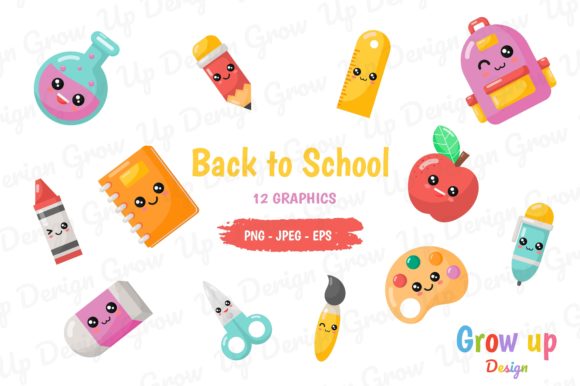
Before diving into workflow, it helps to know what you are working with. The set provides a single design—a pot plant sticker with a back-to-school theme—delivered in seven formats: AI, EPS, SVG, DXF, JPG, and PNG. Each canvas is sized at 1920 x 1280 pixels, which gives you a solid base resolution for both digital and print uses. The design is described as easy to use and editable, meaning the vector files are structured in layers and elements that you can modify without breaking the artwork.
This format availability is not just a convenience. It reflects a real understanding of how different tools and production methods demand different file types. If you use Adobe Illustrator, you open the AI file. If you work with a laser cutter or a hobby plotter, DXF is your go-to. If you need a transparent background for a mockup, PNG is ready. SVG serves web and lightweight vector work. EPS bridges legacy software and large-format printing. JPG covers quick previews or low-resolution needs.
Having all these in one download saves time. You do not need to convert files yourself, which avoids quality loss, color shifts, or layer flattening that can happen during conversion. For anyone managing multiple projects or clients, this kind of completeness reduces friction at the start of a task.
Where This Design Fits in a Broader Creative Workflow
Every project has a before, a during, and an after. The Back to School Pot Plant Stickers SVG is most useful during the asset preparation and production phases, but its impact stretches into planning and follow-up work.
Before the Project: Planning and Asset Selection
When you are planning a product line, a classroom activity, or a bulk order of promotional items, the first step is deciding on the visual theme. A pot plant sticker with back-to-school vibes works well for September campaigns, teacher appreciation gifts, school supply labels, or nature-themed educational materials. Because the design is already created and tested, you can skip the conceptual phase and move directly to adaptation.
During planning, you might ask yourself: will this design work across the products I plan to offer? With the Back to School Pot Plant Stickers SVG, the answer is usually yes. The subject is neutral enough to appeal to both children and adults, and the plant theme connects to growth, learning, and the start of a school year. The vector format means you can rescale it for a tiny sticker or a large poster without losing clarity.
During the Project: Production and Adaptation
This is where the set earns its keep. You open the file in your preferred vector editor, and the layered structure lets you adjust colors, remove elements, add text, or combine it with other designs. For example, you might want to change the pot color to match a brand palette, or replace the plant species with a different leaf shape. Because the design is built to be editable, these changes take minutes rather than requiring a redraw.
If you are producing physical products, the availability of DXF and SVG means you can send the file directly to a cutting machine or a laser engraver. No need to trace or redraw. The 1920 x 1280 pixel canvas is a practical size—large enough for most print-on-demand products, but not so massive that it bogs down your software. For shirts, you may want to adjust the scale, but the resolution holds up.
For digital use, such as social media graphics or blog headers, the PNG file with transparency is a time-saver. Drag it into Canva, Photoshop, or a presentation tool, and it is ready to go. The JPG version works for quick mockups or low-resolution previews when you are iterating on layout.
After the Project: Quality Control and Reuse
Once production is done, the same file can serve for reprints or variations. If a sticker sells out, you can reorder without re-editing because the master files remain intact. If a customer requests a different size, you scale the SVG in seconds. If you later decide to offer the design on a tote bag or a card, the same vector file works with minimal adjustment.
This long-term reuse is valuable for entrepreneurs and small businesses. One design purchase can support multiple product SKUs over months or years. The key is keeping your vector files organized in a library, named clearly, so you can find them quickly when a reorder or adaptation comes up.
Practical Implementation Tips for Different Use Cases
The Back to School Pot Plant Stickers SVG is flexible, but how you use it depends on your tools and your end product. Here are specific approaches for common scenarios.
For T-Shirts and Clothing
If you print on garments, the design needs to work as a single-color or limited-color print to keep costs reasonable. Open the AI or SVG file and reduce the color palette to two or three colors. Remove any gradients or shading elements if present, or convert them to solid color blocks. Adjust the scale so the design fits the print area—typically 10 to 12 inches wide for an adult shirt. Export as a vector file in your printer’s preferred format, often SVG or AI with outlines preserved. If you use heat transfer vinyl, the DXF file is ready for your cutting machine. Load it directly and trim the excess material.
For Stickers and Decals
Sticker production benefits from the PNG format with a transparent background. You can print on adhesive paper using a home printer and cut by hand, or send the file to a sticker manufacturer. For die-cut stickers, the DXF or SVG format with crisp outlines ensures the cutter follows the exact shape of the plant and pot. If you are using a Cricut or Silhouette machine, import the SVG and check the layer structure. Sometimes grouped layers need to be ungrouped to separate cut lines from print lines. Set the machine to cut on the outer edge of the design.
For Posters and Wall Art
Posters require high resolution. The PNG file at 1920 x 1280 pixels is suitable for small to medium prints—roughly 6.4 x 4.3 inches at 300 DPI. For larger posters, open the AI or EPS file and export at your desired dimensions. Because vector formats are resolution-independent, you can scale to 24 x 36 inches without pixelation. When preparing for print, convert text to outlines if any exists, embed fonts, or confirm your print shop accepts vector files. Add a bleed of 3 mm around the edge if the design goes to the edge of the paper.
For Tote Bags and Cards
Tote bags often use screen printing or heat transfer. The same vector file works for both. For screen printing, separate the colors into individual layers and provide each layer as a separate file. For heat transfer, use the SVG or DXF to cut vinyl. On cards, the design can be printed directly or used as an embossing template. If you are making greeting cards in small batches, print the PNG onto cardstock and cut with a trimmer. For larger batches, consider converting the design into a single-color stamp or ordering custom-printed cardstock.
How This Set Interacts with Other Tools and Resources
The design is not an isolated asset. It works alongside other tools in your creative stack, and understanding that interaction helps you get more out of the purchase.
- Vector editors (Illustrator, Inkscape, CorelDRAW): Use the AI or EPS files for deep editing. Adjust colors, reshape elements, combine with other vector assets, or add text. If you use Inkscape, import the SVG for native compatibility.
- Raster editors (Photoshop, GIMP, Affinity Photo): Open the PNG or JPG for raster work, such as adding drop shadows, textures, or blending the design with photographs. The transparent PNG is especially useful for layered compositions.
- Cutting machines (Cricut, Silhouette, Brother ScanNCut): DXF and SVG are the standard formats. Import directly, check the cut lines, and send to the machine. Make sure your machine software is updated to handle these file types.
- Print-on-demand platforms (Printful, Redbubble, Teespring): Upload the PNG or JPG for direct product mockups. The 1920 x 1280 pixel size works for many standard product templates. For best results, check each platform’s recommended dimensions and adjust if needed.
- Educational platforms (Google Classroom, Canva for Education): The PNG file can be inserted into slides, worksheets, or digital assignments. The plant theme works for science lessons, growth mindset posters, or classroom decoration.
When you combine this design with other assets, such as fonts, textures, or brand colors, you create a custom look while still relying on the base design for structure. Over time, these combinations become part of your personal or business style library.
Organization and Long-Term Use
Once you download the set, take a few minutes to organize the files for future access. Create a folder named “Back to School Pot Plant Stickers SVG” and keep all seven formats inside. Rename the files clearly, for example: back-to-school-pot-plant-stickers.ai, back-to-school-pot-plant-stickers.svg, and so on. If you plan to modify the design, save your edited version with a different name and note the changes in a text file or spreadsheet. This habit saves time when you revisit the project months later.
For entrepreneurs, consider creating a product sheet that lists all the products you have made with this design. Include the file used, the printer or manufacturer, the scale, and any modifications. When you need to reorder, you can reproduce the exact result without trial and error.
For educators and hobbyists, keep the files on a cloud drive or USB drive so they are accessible from any device. If you use classroom technology, the PNG and JPG formats are the most portable. You can also convert the SVG to PDF for distribution if needed.
Quality Control Considerations
Before sending any file to production, check a few things. Open the vector file and zoom in to ensure paths are clean with no stray anchor points. Verify that the colors are in the correct color space—CMYK for print, sRGB for digital. Test the cut lines on a scrap material if you are using a cutting machine. For print, do a small test run to confirm the scale and color match your expectations.
Because the design is provided in multiple formats, you have the flexibility to choose the best format for each production method. The DXF file is ideal for precise cutting, while the PNG gives you a quick visual check. Use the JPG for low-cost proofing before committing to a full print run.
Why This Design Works for a Wide Range of Users
The Back to School Pot Plant Stickers SVG suits professionals and hobbyists alike because it solves a common problem: needing one design that adapts to many outputs. Freelancers can offer clients a variety of product mockups without creating each from scratch. Small business owners can test a new product category with minimal upfront investment. Teachers can prepare classroom materials quickly. Bloggers and content creators can add a polished visual to their posts without hiring a designer.
The key is not the design itself but how you integrate it into your process. When you have a reliable asset that opens in multiple tools, edits cleanly, and produces consistent results across formats, your workflow becomes more predictable. Predictability saves time, and time is often the scarcest resource in creative work.
Whether you are preparing for a single project or building a product catalog that will last for seasons, this set gives you a foundation. The formats are ready. The canvas size is practical. The subject is timely. What remains is your intent and your workflow—and that is where the real value begins.