How the Illustration Back to School Globe Icon Enhances Your Creative Workflow
Whether you are a graphic designer preparing a seasonal campaign, a small business owner launching a product line, or an educator assembling classroom materials, having a reliable, high-quality vector asset can streamline your entire process. The Illustration Back to School Globe Icon paired with a complementary school vector set offers a flexible foundation that fits into planning, production, and distribution workflows. This article walks through practical ways to integrate the asset into your routine, from initial concept to final output across multiple formats.
Understanding the Asset: More Than Just a Graphic
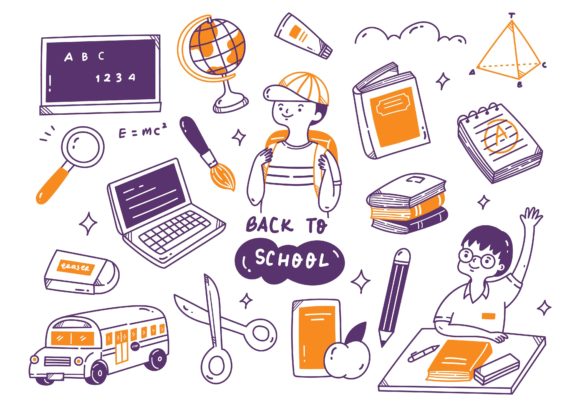
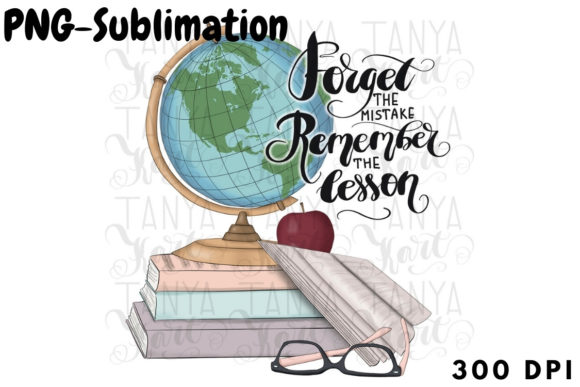
This illustration set typically includes a stylized globe icon, often paired with school-related motifs like books, notebooks, or children’s book designs. The package contains one AI file, one EPS file, one JPG file at 300 dpi, and one PNG file at 300 dpi. The vector formats (AI and EPS) allow you to edit shapes, colors, and sizes without losing quality, while the raster files are ready for immediate use in mockups or social media posts. The high resolution ensures crisp results on both digital screens and printed materials.
Beyond the standard back-to-school theme, the design is also described as suitable for Easter-related projects. This flexibility means you can adapt the icon to seasonal promotions, holiday cards, or themed merchandise—expanding its value beyond a single event.
Before the Project: Planning and Concept Development
During the early stages, you often gather reference materials and build mood boards. Downloading the AI or EPS file gives you a scalable starting point. You can place the globe icon into a draft layout to gauge composition, scale, and color harmony. Because the design is clean and recognizable, it works well for brainstorming themes around education, travel, or global awareness—especially when combined with other assets like typography or patterned backgrounds.
If you are creating a product line (phone cases, totes, pillows), the vector format lets you quickly test different color variations. For example, you might swap the globe’s base blue for a pastel palette to suit an Easter collection, then revert to bold primary colors for a standard back-to-school set.
During the Project: Production and Iteration
Once you move into active design, the file structure supports efficient editing. Open the EPS in Adobe Illustrator, Affinity Designer, or Inkscape to manipulate individual elements. You can separate the globe from the book or notebook vector, adjust line weights, or add textures. The PNG file at 300 dpi serves as a quick overlay in Photoshop or Canva when you need a transparent asset for social media graphics or printed paper mockups.
The set’s compatibility with common design tools means you can layer it with photos, icons, or text without re-creating artwork from scratch. If you are producing T-shirt designs, the high-resolution JPG allows you to preview dimensions and placement on a blank garment template before ordering samples.
After the Project: Repurposing and Scaling
One of the strongest workflow advantages is how easily you can reuse the asset across different outputs. The same vector globe can become a central motif on your website header, a small detail on a printed notebook cover, a full-screen pattern for a pillow, or a watermark for social media content. Because you have both vector and high-res raster files, you never need to start from scratch for each new medium.
For example, after launching a back-to-school product line, you might use the same element to create matching Instagram stories, a Facebook banner, and a printed paper coupon. This consistency builds brand recognition and saves production time.
Print-on-Demand Creator (T-Shirt, Tote, Pillow)
Start by opening the EPS file in your vector editor. Isolate the globe icon and any school-related elements you want. Adjust colors to match your brand or the season. For an Easter-themed tote, soften the tones to mint green, lavender, and pastel yellow. Export a transparent PNG at 300 dpi and upload it to your print platform. Because the file is already sized for high resolution, the design will remain sharp on fabric or canvas. Repeat the process for pillows—simply rotate or scale the icon to fit a square layout.
Social Media Content Creator
For quick posts, use the included JPG or PNG directly. Drop the transparent globe icon onto a solid background in Canva, add text, and schedule. The 300 dpi resolution is overkill for digital but ensures that if you later repurpose the graphic for a printed flyer, it won’t pixelate. If you manage multiple platforms (Instagram, LinkedIn, Pinterest), create a template where the globe icon remains constant, and you swap out secondary imagery or captions. This cuts design time in half.
Educator, Blogger, or Publisher
Use the vector to design worksheets, reading logs, or classroom decorations. The book and notebook vectors complement typography-heavy layouts. If you are developing an Easter-themed activity booklet, combine the globe icon with bunny or egg illustrations from other sources. The AI format lets you scale the globe down to a small watermark or expand it to a full-page background. For print-on-demand educational materials, the 300 dpi JPG provides a ready-to-print artboard.
Ensuring Compatibility and Usability from File to Final Output
File format selection depends on your software and output destination. AI and EPS are best for editable vector work—use them if you own Adobe Illustrator or a compatible alternative like CorelDRAW. JPG and PNG (both 300 dpi) are universal and openable in any image editor, including free tools like GIMP or Photopea. For silk-screen printing on apparel, vectors are preferred because they allow easy separation of colors. For full-color digital printing on paper or polyester, the high-res JPG works well.
Before finalizing, check your output resolution. If you resize the vector too small and export, the text or thin lines in the globe may become muddy. Always test at the intended scale using a preview in your design software. The PNG’s transparency is especially valuable when placing the globe over colored backgrounds—no white box, no extra clipping.
Organizing Your Asset Library for Long-Term Efficiency
Once you download the set, store the AI and EPS files in a dedicated folder for vector assets. Name them with descriptive keywords (e.g., “back-to-school-globe-vector.ai”, “easter-school-icon.eps”). Keep the JPG and PNG copies separate but linked via a shortcut if you use a digital asset manager. Tag the files with both “school” and “Easter” so you can retrieve them quickly during holiday planning sessions.
For teams, establish a naming convention and folder structure. This avoids confusion when multiple people need the same element. If you reuse the globe across many projects, maintain a master file with layers intact—never flatten the artwork unless you are confident you won’t need to edit later.
Quality Control and Consistency Across Media
When outputting to different substrates—fabric, paper, screen—check color profiles. The same blue can appear different on a glossy phone case versus a matte pillow. If you print on dark T-shirts, ensure the PNG has a transparent background and that the globe colors are light enough to stand out. For digital use, sRGB is standard; for print, convert to CMYK if your printer requires it. The AI/EPS files let you switch color modes without degrading the artwork.
Consistency matters most when using the globe across a product family. Keep the proportions locked, and maintain a consistent stroke weight if the vector includes outlines. If you plan to use the icon as a repeating pattern for printed paper or fabric, test the tiling in your vector software to ensure seamless joins.
Observations on the Design’s Versatility
The globe icon balances simplicity and detail—it’s recognizable but not overly complex, making it suitable for both small phone case prints and large posters. The school vectors (books, notebooks) add context without cluttering the composition. Because the set is described as suitable for Easter, it likely incorporates elements like soft curves or pastel-friendly shapes that allow easy recoloring. This duality is valuable for creators who maintain a thematic product line across multiple holidays.
From a brand standpoint, the globe icon works as a flexible symbol for knowledge, connection, and exploration. It can represent an educational company, a travel-related blog, or a stationery brand. The included file formats remove technical barriers, letting you focus on creative application rather than file conversion.
Final Thoughts on Making the Most of This Vector Set
Think of the Illustration Back to School Globe Icon not as a single-use graphic, but as a building block for your creative system. By leveraging the vector and raster files at different project stages—planning, production, repurposing—you save time, maintain visual consistency, and open doors to seasonal adaptations like Easter. Organize your files, test your outputs, and experiment with recoloring or combining elements. When used intentionally, this asset becomes a reliable tool that fits into your real workflow, whether you are fulfilling a single order or managing a multi-channel product launch.